
How Do You Prepare the Ground for a Backyard Putting Green? – A Step-by-Step Guide for Colorado Golfers

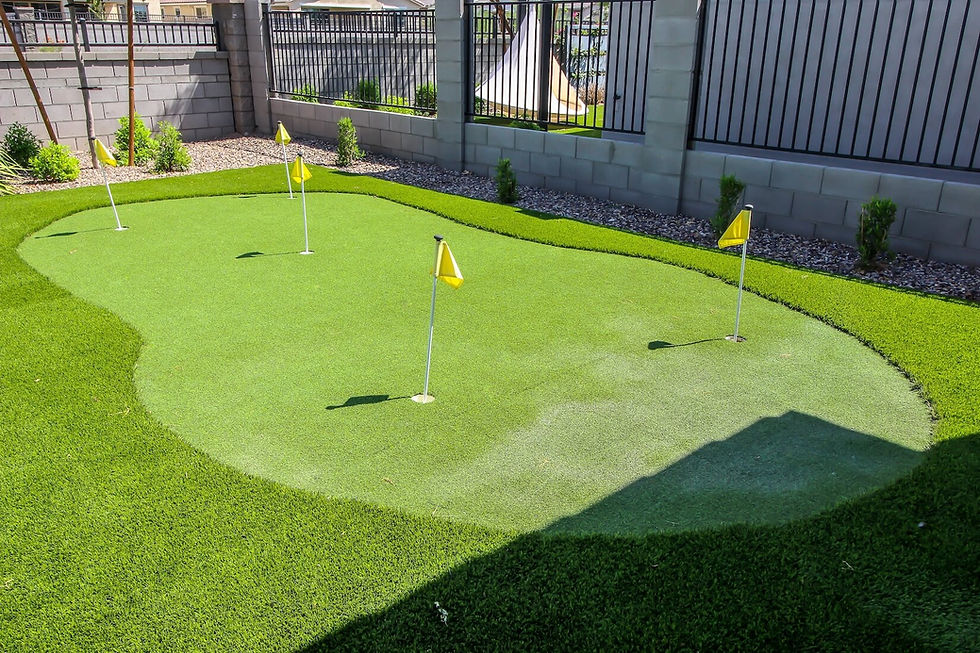
Dreaming about rolling a few putts before breakfast or practicing chip shots while dinner’s on the grill? A custom backyard putting green turns that dream into a daily reality, if the foundation is done right. Poor sub-base work is the number-one reason home greens lose speed, develop ripples, or flood after a snowmelt, especially here along Colorado’s Front Range, where freeze–thaw cycles are brutal. Below, we walk you through each stage of ground preparation, from the first site check to the final laser grade, so your green rolls true for decades.
1. Site Evaluation and Design Layout
Measure, observe, and mark. Start by mapping the available yard space with a long tape and a can of marking paint. Look for:
Sunlight exposure. Full sun encourages faster spring melt but can heat turf; light afternoon shade is ideal.
Natural drainage patterns. Avoid low spots where runoff already pools.
Access for equipment. Wheelbarrows can squeeze through 36-inch gates; compact skid steers need about 48 inches.
Slope planning. A residential green performs best with subtle undulations: 1% to 3% grade changes. Anything steeper and putts won’t stop; flatter and they become boring. Mark high points and low points with flags so you can sculpt contours later.
2. Removing Existing Sod and Topsoil
Rent a sod cutter or let our landscaping crew strip grass to at least three inches below final turf height. Shovel out remaining roots and organic debris; decomposing roots create air pockets that settle later.
If your yard soil is heavy clay (common south of Denver), excavate an extra inch and backfill with clean road-base to improve drainage.
3. Installing Perimeter Containment
Synthetic putting surfaces need a rigid border to lock edges and stop base gravel from escaping. Popular choices:
Pressure-treated lumber (2×4 or 2×6) staked vertically.
Bender board for flexible curves.
Poured-in-place concrete curbing for a polished look.
Set the top edge flush with the final turf height so golf balls roll smoothly onto the fringe or adjoining landscape beds.
4. Sub-Base Construction: The Foundation of Speed and Longevity
A. Layer 1 – Geo-Textile Fabric
A heavy woven fabric separates native soil from gravel, stopping clay fines from migrating upward and clogging drainage. Overlap seams 6 inches and spike every two feet.
B. Layer 2 – Crushed Stone Base
Spread 3 to 4 inches of ¼-minus or ⅜-minus crusher fines (angular granite). The angular shape interlocks under compaction yet allows rapid water flow—crucial when a March snowstorm melts in an afternoon.
Use a vibrating plate compactor in 2-inch lifts, watering lightly between passes. Target 95% Proctor density; if footprints leave more than ⅛-inch depression, keep compacting.
C. Laser Grading and Contour Shaping
Now sculpt breaks and tiers. A laser level or rotary laser ensures precise high-low mapping; hand rakes finesse gentle swales. Check slopes with a three-foot digital level and aim for no more than 3% grade.
5. Cup Placement and Setting Sleeves
Mark hole positions after contouring; cups on peaks create unfair roll-offs, while cups in valleys collect sand and water.
Auger 6-inch-diameter holes through the compacted base.
Insert PVC or ABS cup sleeves so the rim sits ¼ inch below finished turf height (to allow turf and infill).
Backfill around sleeves with tamped crusher fines for rock-solid stability.
6. Optional Shock Pad or EPP Underlayment
For a softer feel, or to meet tournament speed targets, a ½- to ¾-inch closed-cell shock pad goes over the stone base. It smooths minor imperfections and offers a slight bounce on chip shots. In Colorado’s climate, choose pads rated for -40 °F so they remain flexible through winter.
7. Laying the Putting Turf
Orientation matters. Align turf so blade direction points toward primary putting lines; this prevents nap from kicking the ball left or right. Dry-fit panels, leaving an inch overhang on all sides.
Seaming: Trim factory edges, butt seams tightly, and bond with seaming tape and two-part turf adhesive. Weighted boards ensure an even glue cure.
Trimming Perimeter: Cut excess turf flush with the containment edging using a sharp carpet knife.
8. Infill Application for Speed Control
Pour 30–50 mesh silica sand evenly, using about 1–1.5 lbs per square foot. The sand settles between fibers, dialing in Stimp speed and protecting blades from UV. Broom aggressively with a stiff push broom or power brush until the sand disappears below the tips. Test roll speed; add sand or remove it with a shop vac to fine-tune.
Fringe areas require taller, softer turf and less infill, giving chip shots a realistic check-up behavior.
9. Final Grooming and Bounce Testing
Brush the entire surface once more, then practice a few 10-foot putts. Balls should roll smoothly with no wobble. Drop chip shots from 20 feet. If they bounce too high, lightly water the green and make a final brushing pass to settle sand.
10. Ongoing Maintenance to Protect Your Investment
Weekly Leaf Blowing – Keeps debris from embedding in fibers.
Monthly Brushing – Prevents matting on cup approaches.
Quarterly Sand Top-Ups – Colorado’s dry winds blow away a little infill each season.
Annual Professional Groom – Indy’s crew deep-cleans, checks seam integrity, and readsjust Stimp speed.
Remember, Indy offers full-service landscaping too. We can integrate decorative rock beds, low-voltage lighting, and drought-tolerant plantings around your green for a country-club finish.
Fresh Greens, Flawless Rolls — Let’s Build Yours
Meticulous ground preparation is the difference between a backyard novelty and a high-performance practice surface that lasts 20 years. By combining proper excavation, compacted drainage base, precision grading, and professional installation techniques, you’ll sink more putts and spend less time troubleshooting divots, depressions, or puddles.
Ready to break ground on your personal putting paradise? Contact Indy Artificial Turf & Landscaping at (720) 263-6513, email info@indyartificialturf.com, or schedule a free design consultation today. From base prep to fringe planting, our team handles every detail, so all you focus on is shaving strokes off your short game.


