
What Is Artificial Turf Made Of? A Complete Breakdown for Homeowners


Artificial turf has come a long way from the stiff, plastic-looking surfaces people remember from decades ago. Today’s turf is designed to look, feel, and perform like natural grass, while offering durability, low maintenance, and long-term value.
But What Exactly Is Artificial Turf Made Of?
Understanding the materials behind artificial grass helps you make a smarter decision for your home, especially in Colorado, where weather conditions demand high performance. At Indy Artificial Turf & Landscaping, we believe that a great installation starts with great materials, and knowing what’s under your feet matters just as much as how it looks.
Let’s break down the key components that make up a modern artificial turf system.
The Three Main Parts of Artificial Turf
Artificial turf isn’t just one material. It’s a multi-layer system designed to work together. Each layer plays a role in appearance, durability, drainage, and comfort.
The three main components are:
Turf fibers (the “grass” you see)
Backing (the structure holding everything together)
Infill (the material between the blades)
Beneath all of that is the base layer, which is part of the installation, but just as important.
1. Turf Fibers: The Grass Blades
The visible part of artificial turf is made up of synthetic fibers designed to mimic real grass in both color and texture. These fibers are typically made from one of three materials: polyethylene, polypropylene, or nylon.
Polyethylene (Most Common for Residential Turf)
Polyethylene is the most widely used material for residential artificial grass. It is soft, flexible, and highly realistic, making it ideal for lawns, pet areas, and play spaces.
It’s also:
Non-toxic
UV-resistant
Durable under foot traffic
Comfortable for bare feet and pets
This is the material Indy most often uses for backyard turf installations.
Polypropylene
Polypropylene is a more affordable option, but it is less durable and not as heat-resistant as polyethylene. It is sometimes used for decorative areas or low-traffic spaces.
Because it wears down more quickly, it’s not typically recommended for high-use residential lawns.
Nylon
Nylon is the strongest of the three materials and is often used in specialized applications like putting greens or areas that need extra durability.
While it holds its shape well under pressure, nylon tends to be stiffer and more expensive, so it’s less commonly used for standard residential yards.
2. Backing: The Foundation of the Turf
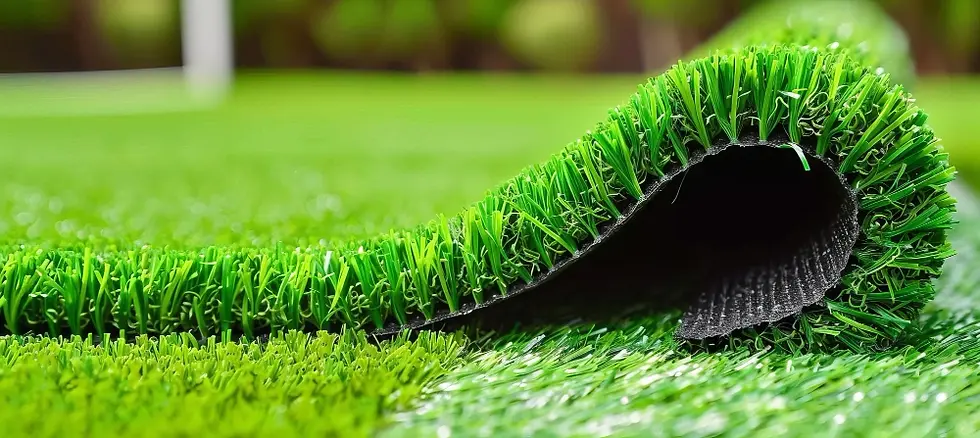
The backing is what holds the turf fibers in place and gives the grass its structure. Think of it as the base layer of the carpet that keeps everything together.
Modern turf typically uses a two-layer backing system:
Primary Backing
This is where the fibers are stitched in. It provides structure and alignment for the grass blades.
Secondary Backing
The secondary layer is usually made from urethane or latex and is applied to lock the fibers in place.
High-quality turf often uses urethane backing, which is:
More durable than latex
Resistant to moisture and temperature changes
Better for long-term performance
The backing also includes perforation holes, which allow water and liquids to drain through the turf.
3. Infill: Support, Stability, and Function
Infill is the material brushed into the turf after installation. While it’s not always visible, it plays a major role in how the turf performs.
Infill helps:
Keep blades standing upright
Add weight and stability
Improve drainage
Enhance durability
Provide cushioning underfoot
Common Types of Infill
Silica Sand
Silica sand is one of the most common infill materials. It’s clean, stable, and helps turf maintain its shape.
Zeolite
Zeolite is a natural mineral often used in pet-friendly turf systems. It absorbs ammonia from pet urine, helping control odors.
Antimicrobial Infill
Some infill products are treated to reduce bacteria growth, making them ideal for families and pet owners.
What We Avoid
At Indy, we do not use crumb rubber infill in residential applications. While it has been used on athletic fields, it retains heat and can produce odors, making it less ideal for home environments.
4. The Base Layer: What’s Under the Turf
While not technically part of the turf itself, the base layer is critical to the overall system.
Artificial turf is installed over a compacted base, typically made from crushed granite or road base. This layer provides:
Stability
Proper drainage
Resistance to shifting
Long-term durability
Without a properly installed base, even the highest-quality turf will fail over time.
In Colorado, where freeze-thaw cycles can affect soil movement, the base layer is especially important.
5. Drainage System: Built Into the Design
One of the biggest advantages of artificial turf is its ability to drain quickly. This is made possible by a combination of the turf backing and the base layer beneath it.
Water flows through:
Perforated holes in the backing
The compacted base layer
The soil beneath
This prevents puddles, mud, and standing water, making the yard usable shortly after rain or snowmelt.
For pet owners, this drainage system is essential for keeping the surface clean and odor-free.
6. UV Protection and Color Technology
Artificial turf is designed to withstand years of sun exposure without fading. This is achieved through UV stabilizers built into the fibers during manufacturing.
Modern turf also uses multiple shades of green, along with brown or tan “thatch” fibers at the base, to replicate the natural variation found in real grass.
This combination of color and texture is what gives today’s turf its realistic appearance.
7. Is Artificial Turf Safe?
Because homeowners often ask about safety, it’s worth noting that modern artificial turf materials are designed with health in mind.
High-quality turf is:
Lead-free
Non-toxic
Hypoallergenic
Safe for kids and pets
When installed correctly with proper materials, artificial grass provides a clean, consistent surface without the need for fertilizers, pesticides, or herbicides.
Why Materials Matter More Than You Think
Not all artificial turf is created equal. Lower-quality products may use thinner fibers, weaker backing, or poor drainage systems. While these options may cost less upfront, they often wear out faster and can lead to issues like flattening, odors, or fading.
At Indy Artificial Turf & Landscaping, we work with trusted manufacturers, including SYNLawn and other premium suppliers, to ensure every installation uses materials that are built to last in Colorado’s climate.
Build Your Lawn from the Ground Up
Artificial turf may look simple on the surface, but it’s a carefully engineered system made up of multiple layers working together. From the fibers to the backing, infill, and base, each component plays a role in how the turf looks, feels, and performs.
When these materials are selected and installed correctly, the result is a lawn that stays green, drains well, and holds up for years with minimal maintenance.
Ready to Upgrade to Artificial Turf?
If you’re considering artificial grass for your home, understanding the materials is the first step. The next step is working with a team that knows how to install it properly.
At Indy Artificial Turf & Landscaping, we specialize in high-quality turf installations designed for Colorado homes. We combine premium materials with expert installation to create outdoor spaces that are durable, functional, and built for real life.
Contact us today to request a consultation to learn more about your options.
A better lawn starts with better materials, and we make sure every layer is done right.


